When sourcing iron castings for industrial applications, compliance is not a “nice to have”. It is essential. UK foundry standards exist to ensure cast components perform as expected under load, pressure, and long-term use. Two of the most important standards you will encounter are EN1561 and EN1563.
At Fowler & Holden, we manufacture castings to both standards every day. This guide explains what each standard covers, how they differ, and why choosing a compliant UK iron foundry matters.
Why Foundry Standards Matter
Foundry standards provide a common framework for quality, safety, and performance. They ensure that castings meet defined mechanical properties and can be relied upon in critical applications.
Working with a compliant foundry helps you achieve consistent results, reduces the risk of component failure, and supports regulatory and contractual requirements. For sectors such as infrastructure, transport, water, and heavy industry, EN compliance is often mandatory.
Standards also provide traceability. This means each casting can be linked back to its material batch, test results, and production process, offering full accountability throughout the supply chain.
What is EN1561?
EN1561 is the European standard for grey cast iron. It defines the material grades, mechanical properties, testing methods, and acceptance criteria for grey iron castings.
Grey iron is widely used because it offers excellent vibration damping, good machinability, and cost efficiency. It is commonly specified for components that are not subject to high impact loads but require dimensional stability and strength under compression.
Typical applications include machine bases, housings, covers, frames, and drainage components.
EN1561 includes several material grades, each defined by minimum tensile strength. Higher grades offer increased strength, while lower grades prioritise ease of casting and cost control. At Fowler & Holden, we regularly supply EN1561 castings for industrial and infrastructure projects across the UK.
Material Grades Under EN1561
Within EN1561, grades are selected based on the required tensile strength and application environment. Lower grades are suitable for non-structural parts, while higher grades are chosen for heavier-duty components.
Selecting the correct grade ensures the casting performs as expected without unnecessary cost or over-specification. Our engineers regularly advise clients on this balance during the quoting stage.
What is EN1563?
EN1563 applies to ductile iron, also known as spheroidal graphite or SG iron. Unlike grey iron, ductile iron contains graphite in a nodular form. This structural difference significantly improves strength, ductility, and fatigue resistance.
EN1563 defines the mechanical properties, elongation values, testing procedures, and quality requirements for ductile iron castings. These properties make EN1563 castings suitable for components that experience dynamic loads, shock, or stress cycling.
Common applications include brackets, housings, structural components, pressure-related parts, and machinery elements used in demanding environments.
As a ductile iron foundry in the UK, Fowler & Holden supplies EN1563 castings to OEMs and contractors who require predictable performance and long service life.
Material Grades Under EN1563
Grades within EN1563 are defined by tensile strength and elongation. Lower-strength grades offer greater ductility, while higher-strength grades provide increased load capacity.
Choosing the correct grade depends on how the component will be used, the loads it will experience, and the level of safety margin required. Our engineering team supports customers in making the right selection based on real-world operating conditions.
Comparing EN1561 and EN1563
While both standards relate to iron castings, they serve very different purposes.
EN1561 grey iron is best suited to static or low-impact applications where vibration damping and machinability are important. EN1563 ductile iron is designed for higher-stress environments where strength, toughness, and fatigue resistance are critical.
Understanding the differences between these standards ensures that your component is neither under-specified nor unnecessarily expensive. This is where working with an experienced foundry adds real value.
What Fowler & Holden Provides
Fowler & Holden operates as a fully compliant UK iron foundry. We manufacture castings to EN1561 and EN1563 standards and support our customers with:
- ISO 9001 quality management systems
- Documented inspection and testing procedures
- Full material certification
- Traceability from melt to finished casting
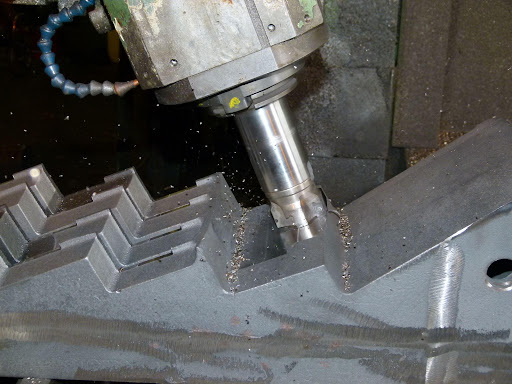
- In-house machining for controlled tolerances
Our compliance processes are designed to support audits, framework agreements, and long-term supply contracts.
Test Certification and Traceability
Every casting we produce can be supplied with supporting documentation. This includes chemical analysis, mechanical testing where required, and clear identification of heat and batch numbers.
Traceability ensures confidence. If a question ever arises about a component, the data exists to answer it quickly and accurately.
FAQs
Q1: What is EN1561 used for?
EN1561 is used for grey cast iron components such as housings, frames, covers, and drainage products.
Q2: How does EN1563 differ from EN1561?
EN1563 applies to ductile iron, which offers higher strength and ductility compared to grey iron under EN1561.
Q3: Why are these standards important?
They ensure consistent material properties, performance, and compliance with UK and European requirements.
Q4: Can you provide test certificates?
Yes. We supply full test certification and supporting documentation for EN1561 and EN1563 castings.
Q5: Are your castings traceable?
Yes. All castings are traceable by batch, heat number, and inspection records.
Work With a Certified UK Iron Foundry
When compliance, performance, and traceability matter, choose a foundry with proven expertise.
📞 +44 (0)1472 355 316
📧 info@fowlerandholden.co.uk
🌐 https://fowlerandholden.co.uk/