A Practical Guide from a UK Iron Foundry
Over the years, engineers, procurement teams and contractors have asked us hundreds of questions about iron casting. Some focus on material grades. Others concern tolerances, porosity, pattern making or delivery schedules.
Rather than answering them one at a time, we have brought the most common foundry questions together in one clear guide.
If you are sourcing cast components for infrastructure, marine, rail, renewables or general engineering, this resource will help you make informed decisions.
Common Questions from Engineers
1. What Is the Difference Between SG and Grey Iron?
This is the most frequent technical question we receive.
Grey iron contains flake graphite. It offers excellent vibration damping and compressive strength. It is often used for drainage, machine frames and housings.
SG iron, also called ductile iron, contains nodular graphite. This structure improves tensile strength and ductility. It is better suited to load-bearing or impact-prone components.
Choosing between them depends on load, environment and performance requirements.
2. What Is Pattern Making?
Pattern making is the process of creating a physical replica of the final component. This pattern forms the mould cavity used during casting.
Patterns can be produced in wood, resin or metal. The choice depends on production volume and required precision.
Accurate pattern making ensures consistent dimensions and reduces defects in the final casting.
3. What Causes Porosity in Castings?
Porosity refers to small voids within a casting. It can be caused by:
- Gas entrapment.
- Improper mould preparation.
- Inadequate venting.
- Rapid cooling.
- Design issues.
Modern foundry practices minimise porosity through process control, correct gating systems and quality inspection.
Working with an experienced UK iron foundry reduces the likelihood of recurring casting defects.
Design Advice for Better Castings
Early engineering input makes a significant difference to final performance.
When designing for casting, consider:
- Adequate draft angles.
- Uniform wall thickness.
- Smooth transitions between sections.
- Allowance for machining.
- Clear tolerance specifications.
Designing with manufacturability in mind improves strength, reduces cost and shortens lead time.
We regularly review drawings before production and suggest refinements that improve both performance and efficiency.
Troubleshooting Common Casting Issues
1. Cracking
Often caused by uneven cooling or excessive stress in sharp corners. Improved design and controlled cooling reduce risk.
2. Distortion
Occurs when geometry or cooling rates are inconsistent. Pattern adjustment and process control can address this.
3. Surface Defects
May result from sand condition or mould preparation. Proper moulding practices and finishing reduce visible flaws.
Our in-house quality checks ensure defects are identified before dispatch.
Understanding Casting Tolerances
Casting tolerances differ from machining tolerances.
As-cast tolerances are typically measured in millimetres. Precision surfaces requiring exact fit are then machined to tighter tolerances.
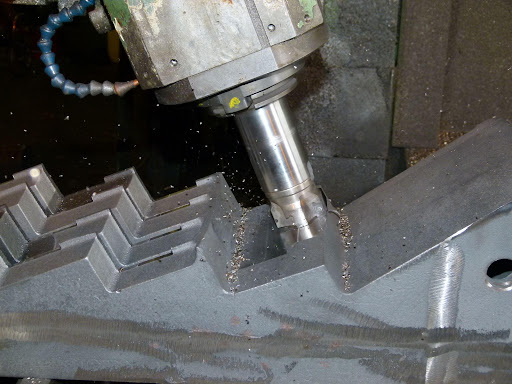
If your project requires bore alignment, flat mating faces or threaded holes, machining will likely be necessary.
We provide integrated casting and machining to deliver components ready for installation.
Finishing Options Explained
After casting, components may undergo:
- Shot blasting.
- Grinding.
- Machining.
- Thread cutting.
- Surface preparation for coating.
The required finish depends on how the component will be used.
We help clients determine which finishing steps are essential and which are optional.
Certifications and Documentation
For infrastructure and civil engineering projects, documentation is often as important as the component itself.
We provide:
- Material identification.
- Traceability records.
- Inspection documentation.
- EN1433 accreditation for FastFlow drainage systems.
UK-Wide Delivery and Project Support
As a UK-based iron foundry, we deliver nationwide. We support short-run prototypes, volume production and scheduled call-offs.
Direct communication between casting and machining teams ensures clarity throughout the project lifecycle.
FAQs
1. What’s the difference between SG and grey iron?
Grey iron provides vibration damping and compressive strength. SG iron offers higher tensile strength and ductility for load-bearing applications.
2. What is pattern making?
Pattern making is the creation of a replica model used to form the mould cavity for casting.
3. What causes porosity in castings?
Porosity can result from gas entrapment, mould design issues or rapid cooling. Process control reduces this risk.
4. Can I request help with casting design?
Yes. We review drawings and provide engineering input to improve manufacturability and performance.
5. Do you ship UK-wide?
Yes. We deliver iron castings across the UK and support phased infrastructure projects.
Download Our Iron Casting RFQ Checklist
If you are preparing an enquiry, ensure it includes drawings, material requirements and tolerance details.
Download our RFQ checklist To simplify the process.
Speak to a UK Iron Foundry That Engineers Trust
Whether you need design guidance, reverse engineering or production support, our team is ready to assist.
Contact us
Call: +44 (0)1472 355 316
Email: enquiries@fowlerandholden.co.uk